
Hypericum: Care, Pet Safety & Vase Life
Hypericum, also called St. John’s wort, is used in floristry mainly for its berries rather than for flowers. The berry stems come in greens, reds, corals, and creams, and they add small, rounded texture in mixed designs. At Green Bench Flowers, hypericum berries show up in fall arrangements such as Harvest Sunset.

Pet safety (cats and dogs)
The ASPCA lists St. John’s wort (Hypericum perforatum), also called Klamath weed, as toxic to dogs, cats, and horses. The toxic principle listed is hypericin, and the clinical sign is photosensitization (sun-related skin inflammation). That listing is for Hypericum perforatum specifically; florist berry stems are in the same genus. Keep the arrangement out of reach of pets. Mixed bouquets may include other flowers, so check the whole design.
Vase life and ethylene
Vase life (our experience): 10-21 days. Vase life depends on a number of conditions, like water freshness, ambient temperature, and wind and sun exposure, so use it as a helpful reference when comparing flowers rather than a guarantee.
Ethylene sensitivity: Not sensitive.
Care tips
Recut the stems, strip leaves below the waterline, and use a clean vase with fresh water and flower food. The berries usually last well; pick off any that shrivel or drop. Keep the arrangement cool and out of direct sun.
Peak season and a few notes
Our Flower Seasons page lists hypericum as year-round. The berry stems are a familiar filler in mixed and autumn designs.
See what’s in season on our Flower Seasons page.
Shop hypericum
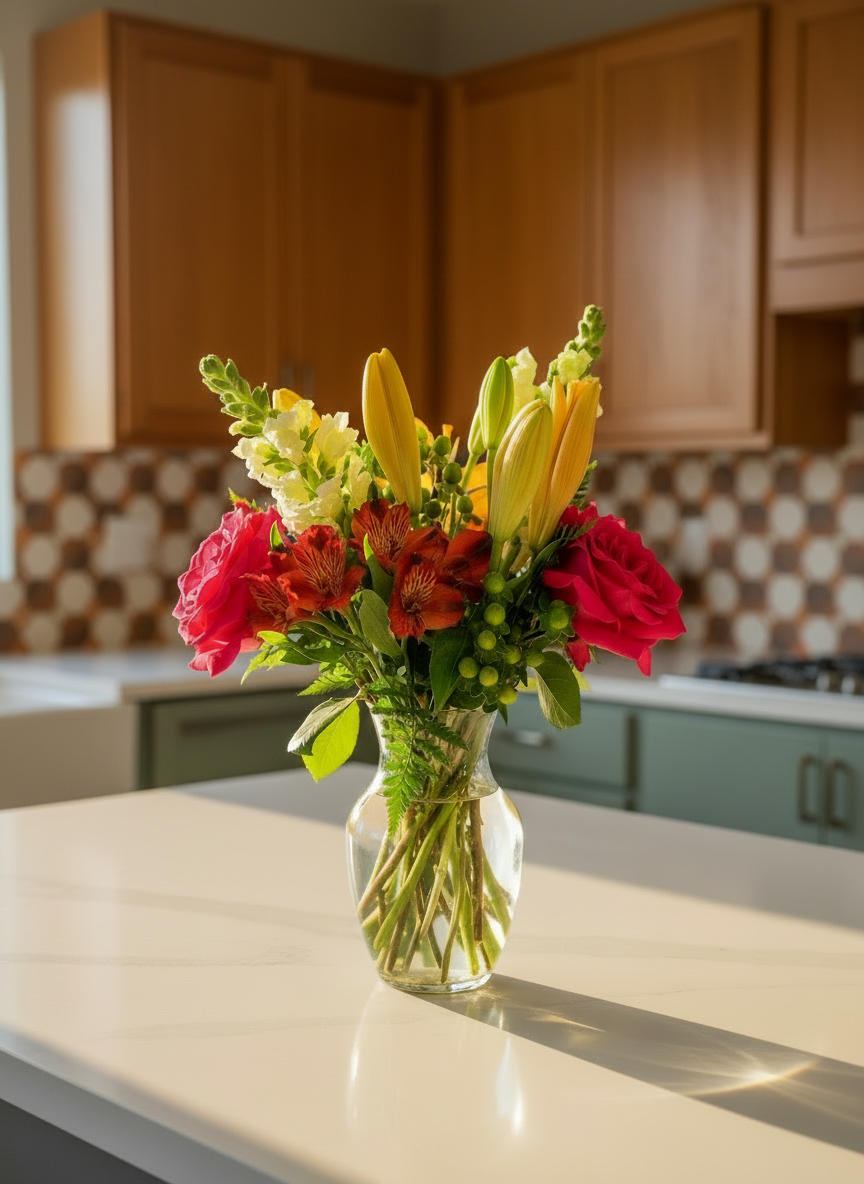
This published design includes hypericum berries:
Sources
- ASPCA, St. John’s Wort (Hypericum perforatum)
- Vase life and ethylene sensitivity are from Green Bench Flowers’ own cut-flower chart (optimum vase life in days, and whether a flower is ethylene sensitive).